
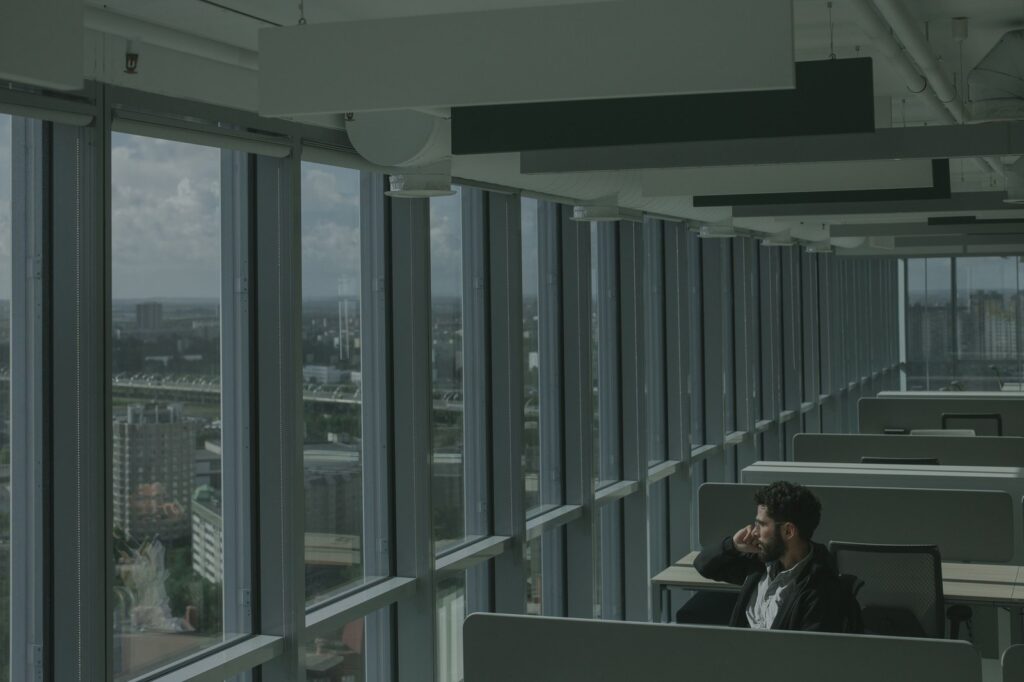
The Unease That Follows a Structural Win, and the Discipline of Asking What It Is Actually Telling You.
There is a specific unease that arrives shortly after a genuine structural win, and most architects have been taught, wrongly, to treat it as ingratitude and suppress it.
The win is real. The metrics confirm it. The counterparties who matter have acknowledged it. And within days, sometimes within hours, a low grade restlessness sets in that has no obvious object, no clear grievance, nothing the architect could point to and call unresolved. The natural response is to feel guilty about the restlessness, since gratitude seems like the only reasonable reaction to a genuine win, and the guilt usually produces a second layer of suppression on top of the first, so that the restlessness is not only felt but also quietly judged as a character flaw.
This is Saturday’s register, quieter than the week’s frameworks, and this is where we sit with the restlessness directly rather than resolving it into either celebration or self reproach.
What the restlessness is not
It is worth naming, first, what this feeling is not, because several adjacent experiences are easy to mistake for it.
It is not ordinary post achievement flatness, the mild anticlimax that follows the release of sustained tension once a goal is reached. That flatness is real and passes on its own within days, requiring no particular interrogation, because it is simply the nervous system settling after a period of elevated focus.
It is not depression, and treating every instance of post win restlessness as a clinical concern misreads a structural signal as a medical one. The restlessness discussed here is specific, mild, and tied to the architecture rather than diffuse across the whole of the architect’s life.
It is not, most importantly, ingratitude. The architect who feels restless after a win is not failing to appreciate the win. The two experiences, appreciation and restlessness, coexist without contradiction, and the discipline is to stop treating their coexistence as a problem requiring resolution in either direction.
The two restlessnesses
There are, on close inspection, two distinct restlessnesses that feel nearly identical from the inside and point in opposite directions.
The first is the restlessness of legitimate reinvention. This restlessness arrives because the win has genuinely completed something, and the architect’s capacity, having grown through the process of achieving it, has quietly outgrown the container the win was achieved inside. This is not dissatisfaction with the win. It is recognition, not yet conscious, that the next structural problem worth the architect’s attention sits somewhere the current architecture does not yet reach. The restlessness is data. It is pointing, accurately, at a genuine next horizon.
The second is the restlessness of flight from discomfort. This restlessness arrives because the win has produced a period of relative calm, and calm, for an architect whose identity has been substantially built around solving hard problems under pressure, can itself feel intolerable. This restlessness is not pointing at a genuine next horizon. It is pointing away from the current one, away from the quieter, less dramatic work of consolidating a win, maintaining a structure, or simply being present in a moment that does not require the architect’s usual intensity.
The two restlessnesses feel, in the moment, almost indistinguishable. Both produce the same physical sensation, the same difficulty sitting still, the same pull toward the next project before the current one has been properly absorbed. The discipline this essay develops is not a technique for making the restlessness disappear. It is a method for telling the two apart before acting on either.
Why the distinction matters
An architect who cannot tell the two restlessnesses apart makes one of two costly errors, repeatedly, across a career.
The first error is chasing the flight restlessness as though it were legitimate reinvention. The architect abandons a genuinely sound structure, one that only needed a period of quiet consolidation, in favour of a new project that offers the intensity the architect has come to associate with feeling alive. The pattern, repeated across a career, produces an architect who has started many things and completed almost none, mistaking each new restlessness for genuine calling rather than recognising the pattern for what it actually is.
The second error is suppressing the legitimate reinvention restlessness as though it were mere flight. The architect, having internalised the discipline of sitting with discomfort rather than fleeing it, applies that discipline indiscriminately, staying inside a structure the architect has genuinely outgrown because leaving feels, superficially, like the same undisciplined impulse the architect has trained themselves to resist. This architect mistakes genuine growth signal for a character flaw to be managed, and remains, for years, inside a container too small for what they have actually become.
Both errors are expensive. Both are avoidable, but only with a method more specific than either always chase the restlessness or always suppress it.
A method for telling them apart
The most reliable test is time, applied deliberately rather than passively.
Flight restlessness tends to diminish, measurably, when the architect engages seriously with the quieter consolidation work the win actually requires. If the architect sits down, deliberately, to do the unglamorous work of embedding the win into the architecture, documenting what was learned, transferring the capability to the team, ensuring the structure holds without the architect’s continued personal intensity, and the restlessness fades as that work proceeds, the restlessness was flight. It wanted a distraction from discomfort, and the discomfort, engaged directly rather than avoided, resolved on its own terms.
Legitimate reinvention restlessness tends to persist, or even intensify, through exactly the same engagement. The architect does the consolidation work seriously, completes it well, and the restlessness remains, because it was never about avoiding the current work. It was accurately reporting that the current work, however well executed, no longer represents the edge of the architect’s actual capacity. This restlessness does not respond to being engaged with more diligently. It responds only to an honest acknowledgement that something has actually changed.
This test requires patience the architect will resist, because both restlessnesses feel urgent in the moment and both create pressure to act immediately. The discipline is to withhold the major decision, whichever direction it points, for a deliberately chosen interval, long enough for the consolidation work to genuinely be attempted, and to observe honestly what happens to the restlessness as a result.
The role of the Discipline of Patience
Volume V’s Discipline of Patience examined the architect’s capacity to wait for the right conditions rather than acting on the pressure of the moment. That essay was substantially about external conditions: waiting for a market, a counterparty, a piece of information to arrive before committing.
This essay applies the same underlying discipline to an internal condition rather than an external one. The patience required to correctly diagnose the architect’s own restlessness is the identical muscle the Discipline of Patience trained for external decisions, applied here to the harder case of a signal originating inside the architect’s own nervous system rather than in the observable world. It is, in some ways, a more difficult application, because the external world offers information that eventually resolves the waiting. The architect’s own restlessness offers no external clock. The patience has to be self imposed, on a schedule the architect sets and honours without an outside deadline forcing the discipline.
The Year of the Build, revisited
Volume VI’s Year of the Build examined a specific, sustained period of intense construction, the kind of year an architecture sometimes requires, where the architect’s whole capacity is directed at a single structural undertaking. That essay largely concerned itself with the conditions that make such a year survivable and productive.
This essay concerns the year that follows. The Year of the Build, done well, produces a genuine win, and the restlessness discussed here is most acute precisely in the months immediately after such a year concludes. The architect who has spent a year at full intensity, directed entirely at one construction, often experiences the most severe version of the flight restlessness described above, because the nervous system has, for a full year, associated the architect’s sense of purpose with a specific, sustained intensity that a period of consolidation cannot supply. This is the moment the two restlessnesses are hardest to distinguish, and it is also the moment distinguishing them correctly matters most, because a Year of the Build followed immediately by another Year of the Build, chosen out of flight rather than genuine necessity, is a pattern that exhausts an architecture and the people inside it far faster than any single hard year would on its own.
What the discipline actually requires
The discipline this essay proposes is not resolution. It is not a method for making the restlessness go away, in either direction, quickly. It is a method for holding the restlessness long enough to ask it an honest question, and for trusting the answer that emerges from genuine engagement with the current work rather than from the architect’s mood in the moment the question is first asked.
The architect who has done this well, across a career, develops a private familiarity with their own two restlessnesses, learning to recognise, increasingly quickly, which one is present on any given occasion. This familiarity does not eliminate the discomfort of sitting with an unresolved restlessness for the deliberately chosen interval the method requires. It simply makes the sitting more informed, and the eventual decision, whichever direction it points, considerably more likely to be correct.
The body’s part in this
The restlessness is not purely cognitive, and treating it as a puzzle to be solved entirely in thought misses half of where it actually lives.
An architect who has spent a sustained period under genuine pressure, the kind Volume VI’s Year of the Build describes, has a nervous system that has adapted to that pressure as its baseline. The sudden absence of the pressure, even when the absence is a wholly positive outcome, registers physically as a kind of withdrawal, not unlike the way any sustained state produces a felt disturbance when it lifts. This is not a metaphor. It is a simple physiological reality that the architect’s mind then narrates, after the fact, as meaning something about the work, the win, or the next decision, when the underlying sensation may have very little to do with any of those things.
The practical implication is that the earliest days after a significant win are among the worst possible moments to make a major structural decision about what comes next, precisely because the body’s adjustment to reduced intensity is easily mistaken for the mind’s judgement about direction. The architect who has learned this distinction builds in a deliberate buffer, a period measured in weeks rather than days, before treating any restlessness felt in the immediate aftermath of a win as decision relevant information at all.
A brief case for boredom
There is a specific, unfashionable capacity worth naming directly: the architect’s tolerance for a period that feels, honestly, a little boring.
Consolidation work, done properly, is frequently less interesting than the work that produced the win. Documenting a process, training a successor, tightening an operational detail that will never be visible to anyone outside the architecture, none of this carries the charge of the original build. An architect who has come to associate their own sense of purpose exclusively with charge, with the feeling of solving something hard in real time, will experience ordinary consolidation as a kind of quiet deprivation, and will misread that deprivation as evidence that something is wrong.
The corrective is not to manufacture false enthusiasm for consolidation work. It is to recognise boredom, in this specific and limited context, as a tolerable and temporary condition rather than a signal demanding immediate escape. An architect capable of sitting inside a moderately boring quarter, without either resenting it or fleeing it, has access to information the architect who cannot tolerate it will never receive, because that architect will always exit the quiet period before it has had time to reveal whether the restlessness was flight or genuine signal.
The Circle’s role in holding the distinction
This is a difficult discipline to practise alone, and one of the underappreciated functions the Circle serves is providing a room of peers who have faced the identical restlessness and can ask the honest question the architect, in the moment, struggles to ask of themselves.
A peer architect, removed from the immediate emotional pull of either restlessness, is often able to observe patterns the architect experiencing them cannot see clearly from the inside. This particular architect has, across three prior wins, moved immediately to the next undertaking each time, without ever completing a full consolidation period. Or, conversely, this architect has stayed inside three consecutive structures long after every available signal suggested genuine growth beyond them. Neither observation is comfortable to hear. Both are considerably more useful heard from a peer at a compatible structural altitude than arrived at alone, months or years later, once the pattern has already cost something significant.
This is a quieter version of the substance the Trust Architecture (Volume V) named regarding the layers of genuine reliance an architecture can place in its counterparties. The same trust, applied here, allows the architect to bring an unresolved, half formed restlessness into a room before it has hardened into a decision, and to receive an honest reading of it from people who have no stake in which direction the architect ultimately chooses.
A closing reflection
The architect reading this on a Saturday, having recently completed something genuinely significant, is invited to notice the restlessness without immediately narrating a story about what it means. The narrating is where both errors begin. The story that says this restlessness proves I am ungrateful and should be suppressed, and the story that says this restlessness proves I must move immediately to the next thing, are both premature. Neither story has yet done the work of actually distinguishing which restlessness is present.
The quieter alternative, harder to practise than either story, is simply to notice the restlessness, name it honestly as one of the two kinds without yet deciding which, and give the consolidation work of the current win a genuine, patient attempt before concluding anything at all. What happens to the restlessness during that attempt is the answer. The architect’s discipline is to wait for it.
Doctrine close
The restlessness that follows a structural win is not ingratitude to be suppressed. It is a signal that requires interrogation before it can be trusted in either direction.
Two restlessnesses. The one that fades under genuine consolidation, revealing itself as flight from discomfort. The one that persists through genuine consolidation, revealing itself as legitimate reinvention. The distinction is found only through patient, honest engagement with the current work, never through immediate reaction.
The Circle is a room of architects who have learned to sit with an unresolved restlessness long enough to know which kind it actually is.
Structure. Access. Positioning.
The Architect Circle is application only. Two hundred and fifty seats globally. createyourownmarket.com.au.