
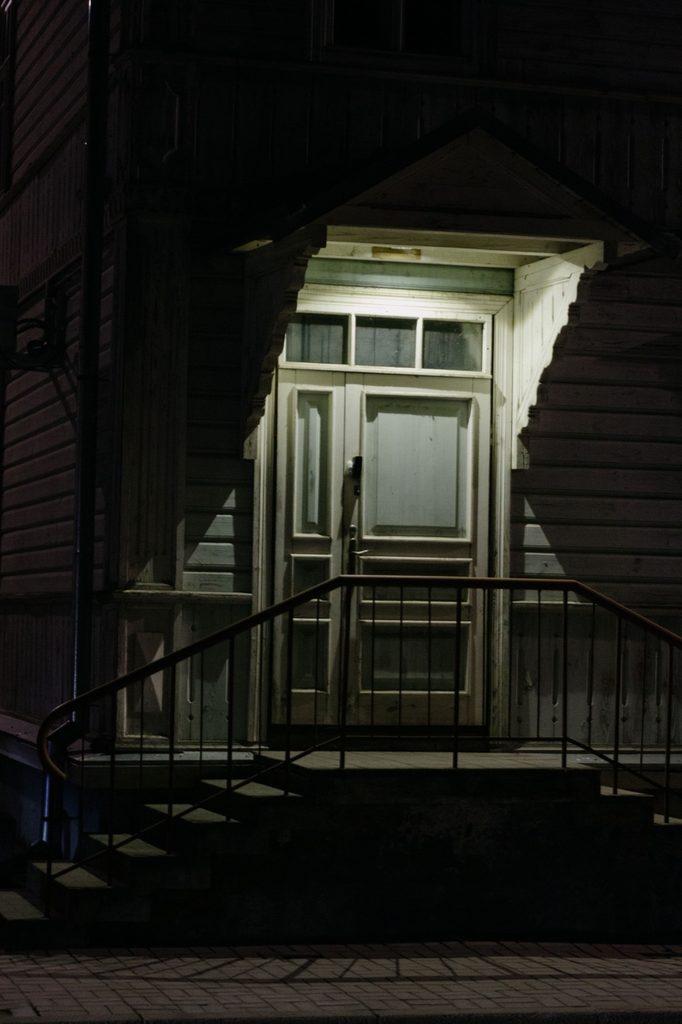
What the Domestic Home Reveals About Whether the Discipline Engineered at Work Has Actually Reached the Household, or Simply Stops at the Office Door.
The home is a small architecture too, and it is frequently the one the architect never actually designed.
This is a quieter essay than the week’s other six. Saturday asks a different question than Monday or Wednesday. Not how to build the framework, but whether the framework the architect has built so carefully at work has ever actually reached the rooms they return to each evening.
Most architects who read this catalogue have engineered their professional lives with real seriousness. The Vehicle Architecture (this week’s Wednesday essay), the Attention Architecture (this week’s Monday essay), the working systems that no longer depend on the architect’s constant presence, all of it represents years of deliberate structural thought. The household, for many of the same architects, has received none of this attention. It runs on habit, on whatever pattern was established early and never revisited, on the leftover energy of a person who has spent their engineered attention somewhere else all day.
This essay sits with that gap honestly. What it costs the people who live inside it. And the discipline of bringing the same quiet rigour home, without turning the household into another performance review.
We ask this on a Saturday deliberately. The other six days of this volume address the architecture the architect builds outward, toward counterparties, capital, and category. Saturday turns the same lens toward the rooms no counterparty ever enters, where the only audience is the people who already know the architect completely.
The office door as boundary
There is a specific and common pattern worth naming precisely. The architect who is genuinely rigorous at work, who audits, reviews, and revises their professional architecture on a real cadence, walks through the office door each evening and becomes a different kind of operator entirely.
At work, decisions are examined. At home, the same architect often runs on autopilot, repeating patterns established years earlier without examining whether those patterns still serve the people living inside them. The bedtime routine that has not been questioned since the children were much younger. The division of domestic labour settled in the first exhausted year of a marriage or a partnership and never revisited since. The weekend structure that optimises for the architect’s own recovery without much thought for what the rest of the household actually needs from those same hours.
This is not hypocrisy. It is a specific and understandable allocation problem. The Attention Architecture named five domains competing for the architect’s attention, and the Relational Domain includes the household explicitly for exactly this reason. An architect who has exhausted their capacity for deliberate thought inside the working day has very little left, by evening, for the kind of examination the household would benefit from. The office door is not a wall the architect builds on purpose. It is simply where the deliberate attention runs out.
The pattern is easy to miss from the inside, because nothing about it looks like neglect in any single evening. The architect is home. They are present in body, sometimes attentive, occasionally even relaxed. What is missing is not presence but the specific quality of examination the architect applies everywhere else, the willingness to ask whether the current arrangement is actually working or has simply never been questioned.
Weekends suffer a related version of the same pattern. An architect who treats the weekend as recovery earned by a demanding week, and treats presence at home as passive rather than active, often mistakes physical presence for genuine attention. Being present in the same house is not the same as being available to the people in it, and a household can absorb a great deal of physically present but functionally absent time before anyone names what is actually missing.
What the undesigned household actually costs
The people who live inside an undesigned household experience something specific, even when they cannot always name it precisely. They notice that the same person who solves difficult structural problems all day seems unable, or unwilling, to apply comparable thought to a recurring domestic friction that has been unresolved for years.
This produces a particular kind of quiet resentment, not because the architect is unloving, but because the mismatch is legible. A partner who watches the architect redesign an entire vehicle structure over a weekend, while the same recurring argument about household logistics goes unaddressed for the third consecutive year, reasonably concludes that the household simply was not judged worth the same seriousness.
Children notice a version of this too, though they lack the vocabulary for it. They notice which problems get the parent’s full, patient attention and which get the tired, reactive version. They form, early and durably, an impression of where they rank against the other demands on the architect’s attention, an impression that is rarely corrected by explanation and is almost entirely formed by what they actually observe.
None of this is a claim that the architect does not love their household, or that professional seriousness comes at the household’s deliberate expense. It is a claim about where the architect’s engineered attention has, in practice, been spent, regardless of where their love has been felt. Love that is genuinely present and attention that is genuinely engineered are not the same substance, and a household can feel the absence of the second even when the first has never been in doubt.
Across a decade, small unexamined frictions compound in a household the same way small unexamined risks compound inside an entity structure. Neither produces a dramatic single failure. Both produce a slow accumulation of cost that eventually becomes difficult to address only because it was never addressed early, when addressing it would have been comparatively simple.
None of this is fixed permanently, and it is worth saying plainly. Households are generally more forgiving of a late start than architectures usually are, because the people inside a household, unlike a counterparty, are typically hoping to be shown that the gap is closing, not searching for evidence that it cannot. An architect who begins the examination this essay describes, even years later than would have been ideal, is rarely met with the same unforgiving arithmetic a stalled business relationship would apply.
A specific and ordinary example
Consider a household where one specific friction has quietly persisted for years. Perhaps it is the chaos of weekday mornings, repeated daily and absorbed as simply how mornings are, though a single hour of genuine attention applied once could likely resolve most of it. Perhaps it is an unequal division of the invisible labour that keeps a household running, noticed keenly by the partner who carries the larger share and barely registered by the one who does not.
None of these frictions are dramatic. None would surface in a single conversation as a crisis. This is precisely why they persist. A crisis forces examination. An ordinary, low grade friction, however costly across years, never forces anything, and an architect whose professional instincts are trained to respond to forcing functions will simply never encounter one at home, because home rarely produces them until the cost has already become very large.
The difference between rigour and performance review
The corrective is not to import the office wholesale into the home. This is the mistake the well meaning architect sometimes makes once they notice the gap, converting the household into another site of audits, metrics, and structured reviews, and discovering that the household resists this treatment for good reason.
A household is not a working system in the sense the architecture uses that phrase professionally. It does not exist to be optimised for output. It exists, differently, to be a place where the people inside it are known, held, and occasionally allowed to be unproductive without consequence. An architect who brings quarterly review cadences to a marriage, or measurable goals to a childhood, has mistaken the substance of what rigour at home should actually look like.
The over corrected version is easy to spot and, for architects, easy to fall into. A household calendar colour coded like a corporate schedule. Weekly family meetings run with an agenda and minutes. Feedback delivered to a partner in the structured language of a performance conversation. Each of these might work briefly through sheer novelty, and each eventually fails, because the household can feel the difference between attention offered as care and attention imported wholesale from a boardroom.
The rigour that belongs at home is quieter than that. It is the same quality of attention the architect brings to a difficult structural problem at work, applied instead to noticing what is actually happening inside the household, rather than assuming the pattern established years ago is still the right one. It is not a scorecard. It is simply paying the same kind of close, patient attention to the people at home that the architect already knows how to pay to a counterparty or a balance sheet.
Bringing the discipline home without turning it into audit
The discipline, practically, looks like a handful of specific habits rather than a system.
It looks like the architect occasionally applying the same fresh examination to a household pattern that they would apply to a stalled business process, asking honestly whether the current arrangement still serves everyone inside it or simply persists because no one has revisited it.
It looks like protecting a portion of the Recovery Domain named in this week’s Monday essay specifically for unstructured presence at home, time that is not spent solving anything, simply spent being present with the people who live there, which is its own kind of attention entirely.
A modest starting point is a single honest question, asked privately once a month rather than announced as a new practice. Is there anything in this household that has been quietly costing us for longer than it should, that a little real attention could address. The question is not a system. It is simply the same habit of honest inquiry the architect already trusts everywhere else, extended, occasionally, to the room where it has been missing most.
It looks like noticing, honestly, which household frictions have gone unresolved for years not because they are unsolvable but because they have never received the kind of patient attention the architect reserves for work. Some of these frictions will turn out to be solvable with the same clarity the architect brings elsewhere. Others will turn out to require something other than solving, a kind of acceptance the architect’s professional instincts resist but the household actually needs.
It looks, finally, like resisting the urge to turn this very examination into a project with milestones. The household notices the difference between a parent who is trying to be more present and a parent who has launched an initiative to be more present. The first is welcome. The second, however well intentioned, repeats the exact mistake it was meant to correct.
The specific discomfort of being seen at home
There is a reason many architects avoid this examination longer than they avoid almost any comparable one at work. Being examined honestly at home means being seen by the people who know the architect best, not in the curated version the architecture presents to counterparties, but in the unrehearsed version that shows up tired, short tempered, or absent on an ordinary Tuesday.
At work, the architect controls a great deal about how they are perceived. At home, over enough years, very little of that control survives. The household has already seen the versions of the architect that never make it into any professional room, and bringing genuine attention home means acknowledging that the people there have been watching all along, forming their own honest account of the gap this essay has been describing, whether or not it was ever discussed.
This is uncomfortable, and the discomfort is not a sign that the examination is wrong. It is closer to the ordinary cost of honesty in any relationship that has gone unexamined for a long stretch. The discomfort passes. What tends to remain, on the other side of it, is a household that has been genuinely looked at rather than simply lived in.
A partner experiences this differently again. Where children form an impression without quite naming it, a partner has frequently named it already, privately or in passing, long before the architect is ready to hear it fully. The partner’s account of the gap this essay describes is rarely a surprise when it finally surfaces directly. It is, more often, an account the architect has been given pieces of for years and has not yet assembled into the whole picture.
Children raised inside a household where professional rigour never crossed the threshold tend to carry a specific inheritance forward, whether or not anyone intended it. Some absorb the lesson that seriousness belongs at work and the home is where a person is allowed to run on autopilot, a lesson many will apply, unexamined, to their own households in turn. This is one of the quieter ways the Generation Doctrine (Volume VII) operates in practice, transmitted not through anything said directly but through what was simply modelled, evening after evening, without comment.
A quieter closing
The Architecture of Rest (Volume 32) named the discipline of protecting genuine recovery from the demands of the working week. This essay sits beside it, asking a related but distinct question, not what the architecture costs the architect, but what an undesigned household costs the people who share it with them.
There is no framework here, deliberately. Saturday does not name four properties or a dominant failure mode, because the household resists that treatment, and an essay that imposed one on it would be repeating the very error it describes.
What there is, instead, is a quieter observation. The discipline that built the architecture is available to bring home, in a gentler form, whenever the architect is willing to notice that the office door has been doing more work as a boundary than they ever consciously decided it should. The vow made at the start of a marriage or a family, named directly in this catalogue’s own Vow (Volume VI), deserves the same seriousness the architect brings to every other structural commitment, extended not as another system to manage, but as the same quality of attention, applied where it has quietly been missing.
The architect who does this well will not announce it. The household will simply notice, gradually, that the same person who has always been capable of extraordinary care somewhere else has finally brought a portion of it home.
Return, once more, to the ordinary example named earlier, the chaotic mornings or the uneven division of invisible labour. Neither requires a framework to resolve. Both require the architect to notice them as clearly as they would notice a comparable inefficiency inside the business, and to bring the same patient, unhurried attention to solving them, without needing anyone to acknowledge that the attention was overdue.
Doctrine close
The household is a small architecture the professional discipline frequently never reaches, not from unwillingness but from simple depletion by evening.
The correction is not to import audits and metrics into the home, but to bring the same quality of patient attention the architect already applies at work, noticing what has gone unexamined for years and resisting the urge to turn the noticing itself into another project.
The Circle is a room of architects who recognise that the household deserves the same seriousness as the architecture, expressed in its own gentler register.
Structure. Access. Positioning.
The Architect Circle is application only. Two hundred and fifty seats globally. createyourownmarket.com.au.