
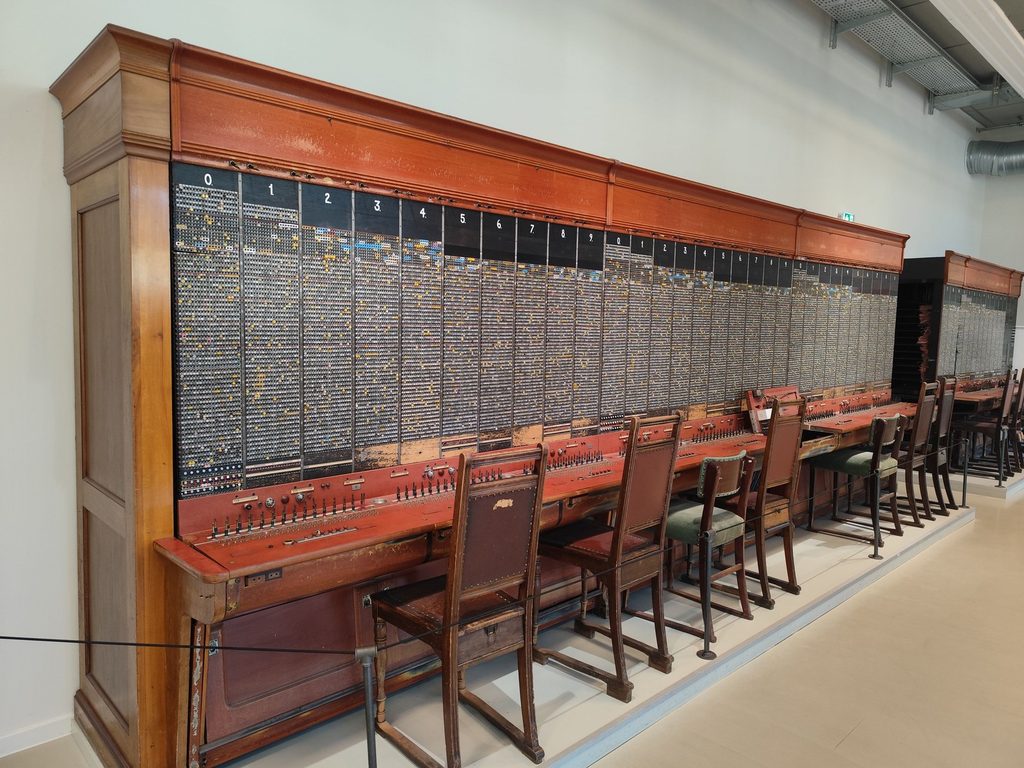
Four Signals That a Category Is Declining Beneath a Business That Still Reads as Healthy in Every Number the Operator Watches.
A declining category and a healthy business look identical from inside for about five years.
This is the structural problem the operator economy has no instrument for. The conversation about obsolescence is conducted entirely in retrospect, using examples everybody agrees about, with the implicit suggestion that the operators involved were inattentive. They were not inattentive. They were reading the numbers that had always been reliable, and those numbers were reporting health accurately right up until they were not.
The numbers report health because the numbers are lagging by construction. Revenue is a record of decisions counterparties made months ago. Margin is a record of competitive conditions that already existed. Customer satisfaction is a record of a relationship, not of a category. An architecture can post its best year in the fourth year of its category’s decline, and frequently does.
This essay introduces the framework. The Obsolescence Audit. Four signals. Replacement only demand. Margin from exit. The customer’s customer. Infrastructure withdrawal. Each is detectable years before the financial statements move. Each is detected at a different tier of Wednesday’s Information Architecture, which is why an architecture with a weak information tier will reliably miss the corresponding signal.
This is the research aligned essay of Volume VIII. Publicly documented Australian and international dynamics are used for orientation, and the sources are listed in the editorial notes at the close. The framework is the substance. The examples are scaffolding.
Why the financial framing fails
Three reasons the financial framing fails the architect.
First reason. Financial statements are lagging by construction. They record completed transactions. A category in decline continues to produce completed transactions for years, because installed bases are large, contracts are long, and buyers change slowly. The statement will report the decline eventually, and eventually is precisely when the optionality has already gone.
Second reason. The operator’s own competence masks the decline. A capable architecture in a declining category takes share from weaker competitors, and share gains offset category losses in the aggregate figures for several years. The architect reads the aggregate, sees stability, and concludes the category is stable. The architecture is in fact running up an escalator that has begun to descend, and the running is what conceals the direction.
Third reason. The framing measures the wrong object. Financial performance measures the business. Obsolescence happens to the category. The Industry as System (Volume IV) established that an industry has its own arithmetic that operates independently of any operator’s quality inside it, and the Wrong Industry Trap (Volume VI) established that no amount of operating excellence corrects an industry’s structural position. Obsolescence is that principle with a clock attached.
The structural framing corrects all three. Four signals, four detection tiers, one audit, run annually, by someone with no career stake in the answer.
Signal One. Replacement Only Demand.
The first signal is the point at which effectively all volume has become replacement of an existing installed base rather than new adoption.
The category has stopped recruiting. Nobody new is entering it. The installed base is large enough that replacement demand sustains volume for years, and that sustained volume is read as stability. It is not stability. It is a fixed quantity of remaining demand being consumed on a schedule that can be calculated.
Four properties to audit for this signal.
First. The new against replacement split. Whether the architecture can genuinely distinguish a first purchase from a repeat. Most cannot, and the inability is itself the primary finding of the audit.
Second. The age profile of the installed base. A base that is ageing without replenishment has a depletion curve, and the curve is arithmetic rather than opinion.
Third. The age of the first time buyer. If the median age of a new entrant into the category rises by roughly a year every year, the category is not recruiting at all. It is simply ageing with its existing participants, and the finding is decisive.
Fourth. The trial to adoption rate among new entrants. Whether the small number of newcomers who try the category stay in it, or sample it once and leave. A category that cannot convert trial has lost the argument with the next cohort.
The dominant failure mode at this signal is counting units rather than buyers. Revenue holds. Unit volume holds. The number of distinct buying entities has been falling for four years and nobody has measured it, because no report in the architecture is constructed to show it. This signal is detected at the proprietary tier, and an architecture without capture discipline is structurally blind to it.
Signal Two. Margin From Exit.
The second signal is margin that holds or improves because competitors are leaving rather than because value is rising.
This is consolidation without growth, and it is the most dangerous signal in the framework because it presents as success. Margins expand. Pricing power appears. Difficult competitors disappear. The architect concludes the market has finally recognised their quality.
Four properties to audit for this signal.
First. Competitor count trend against category volume trend. If the number of participants is falling faster than total category volume, margin improves while the category contracts. This is the arithmetic of a comfortable decline.
Second. The source of accepted price increases. Whether customers accept higher prices because the value delivered has risen, or because the alternatives have disappeared. These produce identical margin lines and entirely different futures.
Third. The entry rate. Whether anyone new is entering the category at all. Capital is not sentimental. It does not enter categories it has already priced, and its absence is a valuation the architect can read for free.
Fourth. Acquisition multiples inside the category. Falling multiples against rising margins is among the most reliable indications available in commercial life. It means informed buyers are discounting the earnings the architect is celebrating.
The dominant failure mode at this signal is reading consolidation as victory. The architect assumes they won the competitive contest. In many cases the other participants simply concluded that the prize was shrinking and redeployed. This signal is detected at the industry tier, through the conversations that reveal why a competitor actually left.
Signal Three. The Customer’s Customer.
The third signal is demand moving two layers downstream while the direct customer has not moved at all.
The architecture sells to a customer. That customer sells to someone else. When the end demand shifts, the direct customer absorbs the shift first, and they absorb it silently, because admitting it weakens their negotiating position and unsettles their own suppliers. By the time the architecture is told, the customer has already restructured.
Four properties to audit for this signal.
First. Visibility depth. Whether the architecture has any instrumentation beyond its direct buyer, or whether the world simply ends at the invoice.
Second. Downstream substitution. Whether the end user is substituting away from the output the architecture’s customer sells. This is the actual demand signal, and it is one layer removed from anything the architecture measures.
Third. The customer’s own capital behaviour. Whether the customer is investing in the line the architecture serves, or merely maintaining it. A customer who maintains rather than invests has already made a decision they have not announced.
Fourth. Specification drift. Whether the customer’s requirements are becoming cheaper, simpler and shorter dated. Specifications are where a customer’s private forecast leaks, because a buyer who expects a line to end will not specify a component that outlasts it.
The dominant failure mode at this signal is treating satisfaction as evidence. The direct customer is content, renews on time and speaks well of the architecture while simultaneously planning an exit from the category. Satisfaction measures the relationship. It has never measured the category. The Customer Architecture (Volume VI) separated these layers precisely so that the architect would not confuse them. This signal is detected at the relational tier, and it requires a counterparty who will speak before they are obliged to.
Signal Four. Infrastructure Withdrawal.
The fourth signal is the removal of the scaffolding the category depends on, performed by parties who are not competitors.
Regulators. Network operators. Insurers. Lenders. Distributors. Training institutions. These parties do not compete with the architecture and have no interest in its position, which is exactly why their behaviour is such a clean signal. They are optimising for themselves, and their optimisation removes the conditions the category requires.
Four properties to audit for this signal.
First. Announced withdrawal timetables. Published dates for the closure of an enabling network, the retirement of a licence class, the removal of a subsidy, the end of an approval pathway. These dates are public, are announced years in advance, and are read by almost nobody outside the affected trade.
Second. Insurance and finance posture. Whether insurers are repricing or declining the category and whether lenders are shortening terms or raising security requirements against it. These institutions model category decline as their core business, and their behaviour is a professional forecast the architect receives at no cost.
Third. The talent pipeline. Whether anyone is training into the trade. A category whose skills are no longer taught has a terminal date that can be calculated from the age distribution of its workforce, and that date is rarely more than two decades out.
Fourth. Adjacent capital reallocation. Whether the largest participants in adjacent positions are moving spend away from the category. Their capital plans are frequently public and are almost always earlier than their commentary.
The dominant failure mode at this signal is treating withdrawal as a policy dispute. The operator campaigns against the timetable, joins the industry response, and mistakes the campaign for a strategy. Announced dates do move. The direction does not. An architecture that has spent four years on the campaign and none on the repositioning has converted a warning into a delay. This signal is detected at the public tier, and it is the cheapest of the four to acquire.
Decline and the cycle
The obvious objection to the framework is cyclicality, and it deserves a direct answer, because every declining category is defended by someone describing it as a trough.
Three tests separate the two conditions.
The first is the recovery test applied to the installed base rather than to revenue. A cycle restores new adoption when conditions improve. A structural decline restores replacement volume only. The architect examines the last recovery in their category and asks what actually came back. If revenue returned but the count of new entrants did not, the previous trough was not a trough. It was a step down that was read as a cycle because the revenue line obliged.
The second is the substitution test. In a cycle, demand is deferred and sits somewhere waiting. In a decline, demand has been captured by a substitute that continues to exist at the bottom of the cycle and continues to take volume while the category waits for a recovery that will arrive smaller. The question is therefore not whether demand fell. It is where the demand went, and whether the place it went is still there.
The third is the infrastructure test, and it is the cleanest of the three. Cycles do not remove scaffolding. Regulators do not retire a licence class because of a soft two years. Insurers do not exit a category because of a downturn they expect to reverse. Network operators do not decommission networks cyclically. This is precisely why infrastructure withdrawal is listed as a signal in its own right rather than as a consequence of the other three. It is the one movement that cannot be explained by the cycle.
There is a bias worth naming here. The architect who has operated through two cycles in a category has read two troughs correctly as troughs, and that experience produces confidence that is entirely earned and entirely misleading. The third reading is the one that determines the outcome, and the two correct readings behind it are the principal reason it is read wrongly.
The integration of the four signals
The signals do not arrive simultaneously. They arrive in a characteristic order, and the order is the most useful property of the framework.
Infrastructure withdrawal arrives first, sometimes a decade early, and is the most legible. The customer’s customer moves second. Replacement only demand becomes measurable third. Margin from exit arrives last, and it is the signal operators most enjoy, which is why it is the one that most reliably precedes a bad outcome. By the time margin is expanding because competitors have left, most of the architect’s optionality has already been spent.
The detection rule is straightforward. One signal is noise. Two signals is a question that deserves a quarter of serious work. Three signals is a conclusion, and the architect acts on it while the financial statements are still reporting health, which is the only period during which acting is worth anything.
The framework maps cleanly onto Wednesday’s tiers, and the mapping is diagnostic. Signal four sits in the public tier. Signal two sits in the industry tier. Signal three sits in the relational tier. Signal one sits in the proprietary tier. An architecture that is weak at a given tier will be structurally blind to the corresponding signal, and it will be blind without knowing it.
What the audit produces
The audit produces three legitimate responses and one common failure.
Harvest. The architect stops reinvesting, extracts cash deliberately, and runs the installed base down against a stated end date. This is frequently the most profitable response available and it is entirely honourable when it is chosen rather than drifted into. Declining categories often produce excellent cash for a decade, and the architect who has priced the decline can operate inside it with more confidence than competitors who have not.
Reposition. The architect moves the capability into a category that is growing, retaining the method, the counterparties and the proprietary substance. This requires that the capability rather than the category was the actual asset, and Thursday’s essay established how much of that assumption is usually unexamined.
Exit. The architect sells while buyers still model the category as stable. The Exit Doctrine (Volume V) established the four shapes an exit can take. The Obsolescence Audit determines the timing, and the timing rule is unambiguous. The window closes when signal two becomes visible to buyers, because buyers read acquisition multiples in the category before they read the architecture’s accounts.
The common failure is the fourth path. Denial, expressed as a plan to work harder inside the category. It converts a valuable exit into a wind down, and it usually consumes the reserve that Monday’s doctrine required the architecture to hold against its concentrations.
The audit cadence
The Obsolescence Audit is run annually, formally, and by someone whose career does not depend on the answer.
That last condition carries most of the weight. Every person inside a business has an interest in the category continuing, including and especially the architect. An audit conducted by the interested party will find reasons, and the reasons will be good ones. The audit is therefore assigned, documented against the four signals, and delivered as a written finding rather than a discussion.
The audit is run against every category the architecture operates in, not only the principal one. Secondary lines decline first and are examined least, and they are frequently where the architect’s own future capability is sitting.
The output is four scores, a stated direction for each signal, and one sentence stating which of the three responses the coming year is executing. An audit that produces no response is not an audit. It is a document.
A note on the catalogue
The Obsolescence Audit is the mirror of Tuesday’s substance. The cost of being early is years spent waiting for a category to arrive. The cost of obsolescence is years spent inside a category that has already begun to leave. Both are timing errors, both are invisible from inside, and both are survivable only by architects who have installed an instrument in advance.
The framework also completes something the Risk Posture (Volume V) left open. That framework categorised the risks an architect holds deliberately. Obsolescence is the risk that cannot be held deliberately, because it does not stay the same size. It is the only category in the architecture that grows while the architect does nothing, and it is therefore the one that requires a scheduled instrument rather than a posture.
Doctrine close
A category can decline for five years beneath a business that reports health in every number the operator watches.
Replacement only demand. Margin from exit. The customer’s customer. Infrastructure withdrawal. Four signals, arriving in a characteristic order, each detected at a different tier of the architect’s information. One is noise. Two is a question. Three is a conclusion, and the conclusion must be acted on during the period when the accounts still disagree with it. The audit produces one of three responses. Harvest, reposition, or exit. It never produces a plan to work harder.
The Circle is a room of architects who audit the ground beneath the architecture on a schedule, who read the withdrawal of infrastructure years before it is discussed, and who recognise one another by the willingness to act while the numbers still look excellent.
Structure. Access. Positioning.
The Architect Circle is application only. Two hundred and fifty seats globally. createyourownmarket.com.au.
Editorial notes
The following publicly available sources informed the orientation of this essay. They are cited for direction rather than for precise figures, and the reader should verify current numbers against the most recent release of each. No member data and no private information appears in this piece.
Postal volumes and infrastructure withdrawal. Australia Post’s annual reporting has documented a sustained decline in addressed letter volumes from their 2008 peak alongside growth in parcels. In 2024 the Australian Government amended the Australian Postal Corporation (Performance Standards) Regulations as part of its postal modernisation reforms, including a change to the delivery frequency of regular letters in metropolitan areas. This is a clean example of Signal Four, where the scaffolding of a category is adjusted by a party that is not a competitor.
Cash distribution. The Reserve Bank of Australia has published repeatedly on the declining share of consumer payments made in cash and on the sustainability of the cash distribution network. During 2024 the cash in transit sector required financial support arrangements involving major banks and large retailers in order to continue operating. A distribution business can remain operationally competent while the category beneath it contracts, which is Signal One and Signal Two arriving together.
Mobile network retirement. Australia’s mobile network operators closed their 3G networks during 2024, with the major closures completed through the second half of that year. The retirement stranded a class of equipment that remained in working order, including older handsets and certain connected devices, and it was announced years in advance. Signal Four is almost always published before it is felt.
Vehicle categories. The International Energy Agency’s Global EV Outlook, published annually and updated through 2024 and 2025, documents electric vehicles moving from a small share of global new car sales toward a substantial one, with the share in 2023 approaching one in five worldwide. Categories serving one propulsion technology can hold revenue on replacement demand for years after new adoption has moved, which is Signal One.
Advertising and media. The Australian Competition and Consumer Commission’s Digital Platform Services Inquiry produced reports through 2024 and 2025 documenting the continued movement of advertising expenditure toward digital platforms. Media businesses in the categories losing share have frequently reported improving margins as competitors exited, which is the presentation of Signal Two.
Business entries and exits. The Australian Bureau of Statistics publishes Counts of Australian Businesses, including Entries and Exits, annually. Entry rates by industry division are a public and underused instrument for the third property of Signal Two, since capital rarely enters a category it has already priced.