
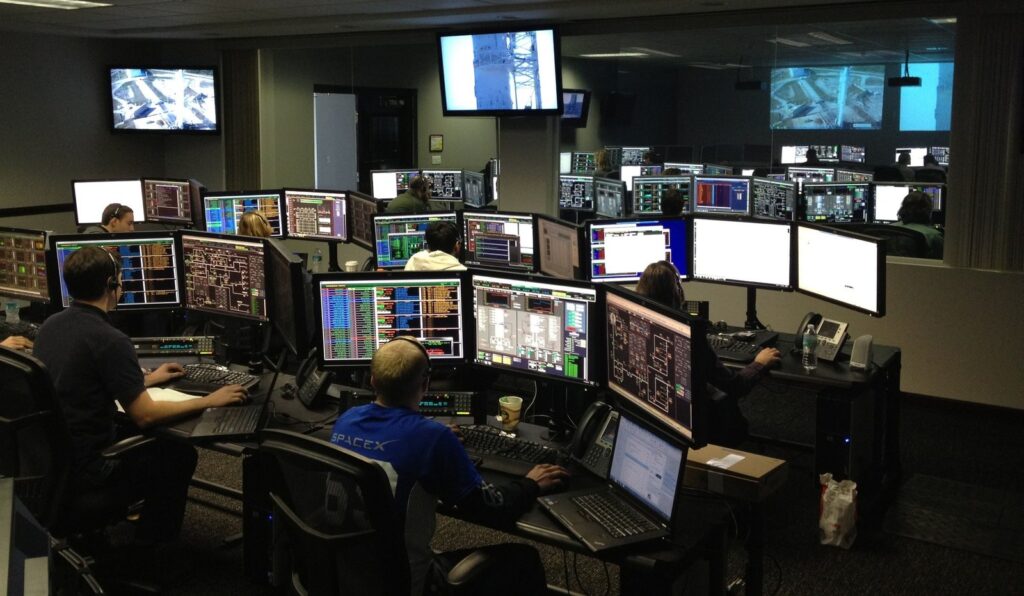
Four Stages of the Response the Architecture Owes Itself Once a Named Risk Stops Being Theoretical.
Naming a risk is not the same discipline as knowing what to do in the first hour the risk materialises.
Most architects believe they have completed the risk discipline once the categories are named. The Risk Posture (Volume V) gives the architecture four categories of risk it carries. Concentration risk. Counterparty risk. Regulatory risk. Reputational risk. The framework is genuinely useful. An architect who has completed it can say, with precision, what kind of exposure the architecture holds and where.
But naming the category is not the same act as knowing what happens in the room in the first sixty minutes after the category stops being a line item and becomes an event. The architect who has completed the Risk Posture and stops there has finished half the discipline and believes the discipline is whole. The second half, the response protocol, is where most architectures actually fail, and it fails quietly, because the failure is invisible until the one hour it is tested.
This essay introduces the framework for the second half. The Contingency Architecture. Four stages. Detection. Containment. Decision. Recovery. Each stage is independently engineerable. Each has its own discipline, its own properties to audit, and its own dominant failure mode. Together the four stages answer the question the Risk Posture does not ask: once the named risk stops being theoretical, who does what, in what order, and by when.
This is Volume X’s foundational lens. The essays that follow this week, on instrumentation and on regulatory exposure, both assume a working Contingency Architecture sits underneath them. Sunday’s flagship draws all three together.
Why the naming framing fails
Three reasons the naming discipline, on its own, fails the architect at the moment it matters most.
First reason. Naming a category of risk describes a static condition. It does not describe a sequence of actions under time pressure. An architecture that has correctly identified concentration risk in its customer base has said nothing about what the team does on the morning that customer gives notice. The category was accurate. The category was also useless in the room, because no one had rehearsed what happens next.
Second reason. The naming discipline is performed calmly, months or years before any event, by people with full information and no adrenaline. The response, when it comes, is performed by people with partial information, compressed time, and the physiological cost of genuine surprise. A plan that assumes the calm conditions of its own drafting will not survive contact with the compressed conditions of its execution. This is the gap between the document and the room.
Third reason. The naming discipline treats risk as a noun. The architecture needs risk treated as a verb. The Final Reckoning (Volume IV) examined the day every architecture eventually faces, the day the accumulated decisions come due at once. The Contingency Architecture is the discipline for that day and every smaller version of it. It is not a document that sits in a folder. It is a sequence the team has rehearsed enough times that the sequence executes under pressure without anyone needing to consult the folder.
The structural framing corrects all three failures. The Contingency Architecture is not a description of exposure. It is a rehearsed sequence, engineered so that the first hour after a named risk becomes an event proceeds on discipline rather than improvisation.
Stage One. Detection
Detection is the mechanism by which the architecture learns that a named risk has moved from category to event, and the honest measurement of how long that learning takes.
Detection is named first because everything downstream depends on its speed. A containment protocol that is flawless but triggers four days late has already lost the four days in which containment was cheapest. The architect’s instinct is to invest in the later stages, the dramatic ones, the decision under pressure and the recovery narrative. The instinct is backwards. The earliest stage is the one that determines how much of the later stages will even be necessary.
The architect’s discipline on detection is to build the mechanism before the event, and to test it against a question that has nothing to do with severity: how would this specific risk actually be noticed, by whom, and how many hours after it began.
Four properties to audit at the detection layer.
First. Signal ownership. A named person, not a named system, is responsible for noticing each category of risk in the Risk Posture. Dashboards do not notice things. People notice things, sometimes with the help of a dashboard, and the architecture needs to know exactly which person is expected to be the one who sees it first.
Second. Threshold clarity. The point at which a wobble becomes an event is defined in advance, in writing, in numbers where numbers are available. An architecture that waits for someone to feel that something is seriously wrong has already lost the hours when the wobble was still small.
Third. Escalation speed. The path from the person who notices to the person who can act is short, known, and does not depend on whoever happens to be reachable that day. A detection mechanism that routes through an assistant, then a deputy, then eventually the architect has built in delay exactly where delay is most expensive.
Fourth. False positive tolerance. The mechanism is calibrated to tolerate occasional false alarms rather than to minimise them at the cost of sensitivity. An architecture that only escalates when certainty is total will, by construction, escalate late.
The dominant failure mode at the detection layer is the assumption of obviousness. The architect assumes a genuine crisis will be self evidently a crisis the moment it begins. Most are not. Most begin as a slightly unusual pattern that a busy team member notices, hesitates over, and sets aside for a calmer week that never arrives before the pattern has become the event the Risk Posture warned about.
Stage Two. Containment
Containment is the set of actions that limit how far a triggered risk spreads before a considered decision can be made about it.
Containment exists because detection and decision cannot happen instantaneously, and the gap between them is where damage compounds if nothing bounds it. The architect’s discipline on containment is to pre authorise a narrow set of actions that any accountable party can take immediately, without waiting for the full decision making process to convene.
This is the stage architects most often skip, because it requires admitting in advance that some decisions must be delegated before the architect is even in the room. The instinct to reserve every consequential action for the architect personally is understandable. It is also the instinct that guarantees the slowest possible containment, because the architect is, by definition, not always immediately reachable.
Four properties to audit at the containment layer.
First. Pre authorisation. A short list of containment actions, agreed in calm conditions, that a named deputy can execute without waiting for approval. Freezing a payment. Pausing a public facing system. Issuing a holding statement. The list is short and specific, not a blank cheque.
Second. Reversibility bias. Containment actions are chosen for how easily they can be undone if the situation turns out to be less serious than first read. An irreversible containment action taken in the first confused hour is a second crisis stacked on the first.
Third. Communication discipline. Containment includes who is told what, in what order, and what they are asked not to say. Containment that stops the operational bleeding while allowing an uncoordinated flow of speculation to spread has only solved half the problem.
Fourth. Time bound authority. Pre authorised containment powers expire automatically after a stated window, forcing the matter back to considered decision rather than allowing emergency powers to quietly become permanent.
The dominant failure mode at the containment layer is the frozen room. Everyone with pre authorised power waits for the architect anyway, because the culture has never actually tested whether the delegation is real. The pre authorisation existed on paper. It had never been exercised, and the first time it was needed, no one quite believed it was theirs to use.
Stage Three. Decision
Decision is the considered judgement, made once containment has bought the time for it, about what the architecture will actually do about the event.
This is the stage the operator economy is most comfortable with, because it looks like ordinary strategic decision making. The architect’s discipline here is narrower than it appears. It is not to make the decision well in the abstract. It is to make the decision inside a structure that has already been engineered to resist the two forces that distort decisions made under pressure: incomplete information and personal exposure.
The Governance Architecture (Volume VIII) is directly relevant here. A mandate that names who is entitled to challenge a decision, tested calmly months earlier, is the difference between a decision stress tested by a composed body and a decision made alone by the person with the least objectivity in the room, because they are the person whose judgement created the exposure in the first place.
Four properties to audit at the decision layer.
First. Composed input. The decision is not made by the architect alone if the mandate names others entitled to weigh in. Pressure is precisely the condition under which the architect is most tempted to bypass the mandate, and precisely the condition under which the mandate is most needed.
Second. Information sufficiency threshold. A stated minimum of verified information is required before the decision is finalised, distinct from the lower threshold that was sufficient to trigger detection and containment. Acting on rumour at the containment stage is often correct. Acting on rumour at the decision stage is not.
Third. Documented reasoning. The decision, and the reasoning behind it, is recorded at the time it is made, not reconstructed afterward. The reconstruction, months later, is reliably more flattering than the reasoning actually was.
Fourth. Reversibility assessment. Before finalising, the decision is explicitly checked against how difficult it will be to reverse if new information arrives in the following days. Decisions that foreclose future options are held to a higher evidentiary bar than decisions that preserve them.
The dominant failure mode at the decision layer is the premature final call. Under the discomfort of an unresolved event, the architecture reaches for finality before the composed input has actually arrived, converting a genuinely uncertain situation into a decided one purely to relieve the discomfort of sitting inside the uncertainty a little longer.
Stage Four. Recovery
Recovery is the deliberate process of returning the architecture to normal operating rhythm and extracting the structural lesson before the memory of the event fades.
Recovery is the most neglected stage, because by the time it arrives the acute pressure has passed and the temptation is to move on. This is the architect’s error. The event that has just concluded is the cheapest opportunity the architecture will ever have to learn something true about its own Contingency Architecture, because the lesson is available while it is still vivid and before the organisation’s story about what happened has hardened into something more comfortable than the truth.
Four properties to audit at the recovery layer.
First. A structured debrief, held within a fixed window after the event closes, examining each of the prior three stages honestly rather than assigning blame.
Second. Update discipline. Findings from the debrief are actually written back into the detection thresholds, the containment pre authorisations, and the decision mandate, not merely discussed and left as intention.
Third. Relationship repair. Counterparties affected by the event, named specifically, are re engaged deliberately, rather than assumed to have simply moved on once the acute phase ended.
Fourth. Narrative honesty. The internal account of what happened matches what actually happened, even where the accurate account is less flattering than the convenient one. The Attribution Problem (Volume VIII) examined the internal distortion that creeps into an architecture’s account of its own outcomes. Recovery is the stage where that distortion is most tempting and most costly, because the account written here becomes the institutional memory the next Contingency cycle relies on.
The dominant failure mode at the recovery layer is premature closure. The architecture declares the matter resolved the moment operations resume, without ever completing the debrief that would have converted the event into a permanently improved architecture. The same category of risk returns, later, and the response is no better than it was the first time, because nothing was actually learned.
The integration
The four stages form one Contingency Architecture. Weakness in one degrades the value of the others.
Fast detection with no pre authorised containment produces early awareness and late action. Strong containment with a paralysed decision process buys time that is then wasted. A sound decision process with no recovery discipline repeats the same failure at the next occurrence, because the architecture never actually improved. The stages are sequential in time and interdependent in value. Each stage’s output is the next stage’s precondition.
This is the discipline the Risk Posture, on its own, cannot supply. The Risk Posture answers what kind of exposure the architecture holds. The Contingency Architecture answers what the architecture actually does, in sequence, once that exposure stops being theoretical. An architect who has completed the first and skipped the second has produced a document, not a capability.
The audit cadence
The Contingency Architecture is rehearsed twice yearly through a structured tabletop exercise, and reviewed in full after any real event, however minor.
The tabletop exercise is not a discussion. It is a timed simulation, run against one of the categories named in the Risk Posture, with the accountable parties actually walking through detection, containment, and decision as though the event were real. The exercise reliably surfaces the gap between the document and the room. A mandate that reads clearly on paper is frequently discovered, in the tabletop, to be ambiguous the moment two people disagree about who has the authority to act.
The architect asks four questions at each review. Where would detection actually be slow, given who is really watching each signal today, not who was named on the document two years ago. Where has pre authorised containment never once been exercised, meaning no one actually believes it is theirs to use. Where does the decision mandate assume information the architecture would not, in practice, have within the first day. Where did the most recent real event’s recovery debrief produce a written change, and where did it produce only a conversation that has since been forgotten.
A note on rehearsal versus prediction
The Contingency Architecture is frequently misunderstood as an attempt to predict which risk will materialise first. It is not. It cannot be. The architect who tries to predict the specific event is engaged in a different, generally futile exercise.
The discipline is not prediction. It is rehearsal of the sequence, independent of which specific category triggers it. An architecture that has genuinely rehearsed detection, containment, decision, and recovery against one category in the Risk Posture has built a transferable capability. The next event, even if it arrives from an entirely different category, is met by a team that has already practised the sequence, rather than a team encountering the sequence itself for the first time under live pressure.
This is why the tabletop exercise need not rotate through every category exhaustively every year. The categories differ. The sequence does not. What is being rehearsed is the architecture’s capacity to move cleanly through detection, containment, decision, and recovery, whichever door the event happens to walk through.
A closing observation
The architect who has completed the Risk Posture and stopped there has produced an accurate map of a territory and no instructions for what to do the day the territory floods. The map was not wasted work. It was half the work, mistaken for the whole.
The cost of stopping at the map is invisible for long stretches, because most named risks never materialise in any given year. The cost becomes visible exactly once, on the day one does, and by then the absence of a rehearsed detection mechanism, a pre authorised containment list, a composed decision mandate, and a genuine recovery discipline has already been paid for, in full, in the compressed and unforgiving hour when it was needed.
Doctrine close
The Contingency Architecture is the discipline for the first hour a named risk stops being theoretical. It has four stages, and each stage has its own failure mode.
Detection. Containment. Decision. Recovery. Rehearsed twice yearly, reviewed after every real event, however small.
The Circle is a room of architects who understand that naming a risk and knowing what to do about it are two different disciplines, and who have engineered both rather than mistaking the first for the whole.
Structure. Access. Positioning.
The Architect Circle is application only. Two hundred and fifty seats globally. createyourownmarket.com.au.