
A Slow Reckoning With the Other Industries, the Other Cities, and the Other Selves Every Structural Commitment Quietly Forecloses.
Every structural commitment forecloses a set of counterfactual lives the architect will never live.
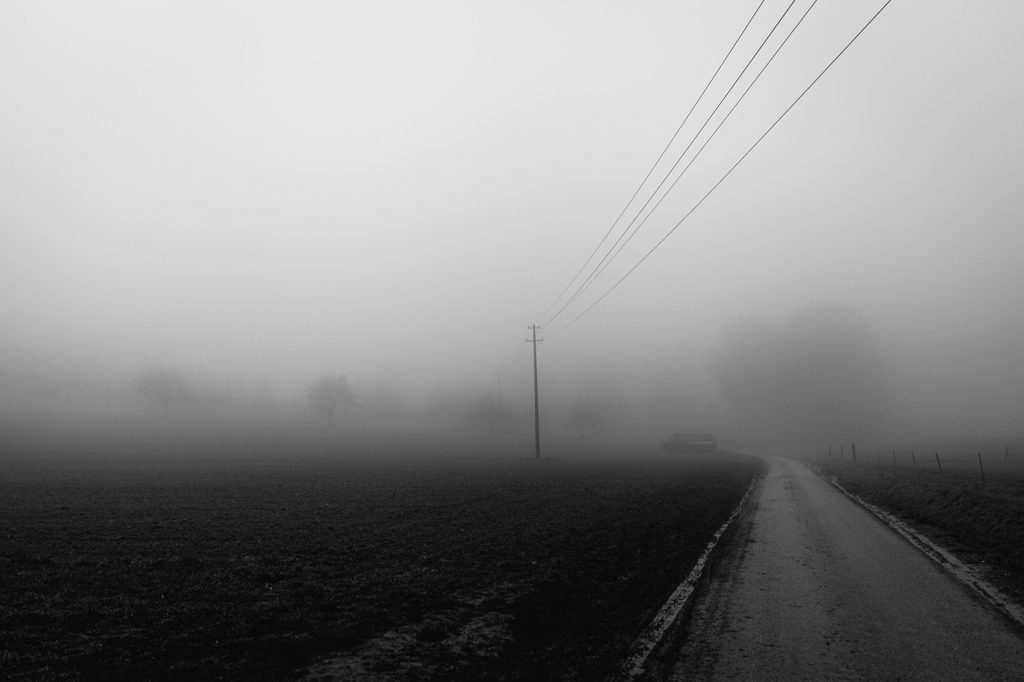
This is the Sunday flagship of Volume 34, and the intellectual high water mark of the week. We move slowly here, as the register requires. We will sit with a single sustained image, the ledger, and use it to examine what every architect eventually discovers alone, usually late at night, usually without warning, that the life actually built was chosen from among many lives that will now never be lived at all.
This is not a melancholy essay, though it moves through some melancholy country to arrive where it is going. It is, in the end, an argument for the foreclosure itself, held honestly rather than denied or performed, as the necessary price of having built anything real.
We will close, as Volume 34 closes, by gathering the week. The Attention Architecture, the Vehicle Architecture, and the Second Curve Doctrine all required the architect to choose. Choosing is what forecloses the unlived lives. The ledger this essay describes is simply the record of that choosing, kept honestly or not kept at all.
Why the standard framing fails
The operator economy offers two standard postures toward the lives not lived, and both are dishonest in their own direction.
The first posture denies the ledger exists at all. This is the posture of relentless affirmation, the insistence that the chosen life was always the only life that mattered, that there is nothing to reckon with because there was never a real alternative worth mourning. This posture is popular because it is comfortable. It is also false. The architect who insists no other life was ever genuinely available is lying to themselves about the actual moments, real and specific, when a different path was live and then was closed.
The second posture indulges the ledger performatively. This is the posture of the wistful account of the road not taken, rehearsed at dinner parties and in quiet confessions, treated as a kind of tragic depth rather than an ordinary structural fact. This posture feels honest and is, in its own way, equally evasive, because it turns the foreclosure into a performance of feeling rather than an actual reckoning with what was chosen and why.
Both postures fail for the same underlying reason. Both refuse to hold the ledger as simply true, an accurate record of what building anything real actually costs, neither denied nor dramatised. The honest posture is quieter than either, and harder to sustain, because it requires looking directly at what was foreclosed without either flinching from it or wallowing in it.
The ledger’s two columns
Picture the ledger literally, for a moment, because the image does real work here.
One column records what was built. The architecture, named and specific, the counterparty relationships, the accumulated wealth, the working systems, the standing inside the rooms that matter, everything this catalogue has described the architect building with patience across decades.
The other column records what this building foreclosed. Not vaguely. Specifically. The other industry the architect might have entered instead, with its own version of the same career, its own successes and its own disappointments, now permanently unknowable. The other city, the one where a different version of this life would have unfolded under a different sky, with different neighbours, a different rhythm to the year. The other selves, the person the architect might have become under a different set of structural choices, a different marriage, a different first employer, a different year in which a door opened or did not.
The two columns must balance, not because one offsets the other in value, but because they are the same entries viewed from opposite sides. Every credit in the first column is a debit in the second. This is not a flaw in the architecture. It is the mechanism by which any architecture at all comes to exist.
A ledger, properly understood, does not judge. It records. The architect who reads their own ledger honestly is not asking whether the chosen life was the right one, a question with no stable answer, but simply confirming that the entries are accurate, that the credits and debits are named for what they actually are rather than dressed up or denied.
The other industries
Consider the industry not chosen.
Every architect who has genuinely built something serious can name, if pressed honestly, the other industry that was live for them at some earlier decision point, the one that would have suited some other version of their capability just as well, that might have produced a career of comparable seriousness under a different name.
The Wrong Industry Trap (Volume VI) named the danger of remaining too long inside a category that has stopped rewarding the effort poured into it. The Second Curve Doctrine, named in this week’s Friday essay, described the signals that indicate when a second curve should begin. Both frameworks assume, correctly, that industries can be exited and entered deliberately across a career. What they do not remove, and cannot remove, is the debit entry created at the original choice. Even the architect who successfully builds a second curve inside a new category has still foreclosed the specific life that would have unfolded had the first industry been the second one, chosen at the start rather than arrived at later, shaped by everything that came before the pivot rather than beginning fresh.
This foreclosure is not a failure of the Second Curve Doctrine. It is what the doctrine is for, choosing deliberately among possible curves rather than drifting, which forecloses the curves not chosen with the same finality a first choice would have, only later and with more information available at the time of the choosing.
The other cities
Consider the city not chosen, which is a smaller entry in the ledger and no less real for its size.
The architect who built their career in one city carries, usually quietly, an awareness of the other city where a different version of the same career might have unfolded, under different weather, among different rooms, with a different accent to the years. This entry rarely announces itself. It surfaces occasionally, on a visit somewhere else, in an unexpected wave of feeling about a life that was never actually lived there, only imagined.
The feeling is real. The life it mourns was never real, in the sense that it never existed to be lost. It existed only as a possibility, foreclosed at the moment the actual city was chosen, and possibilities foreclosed young are foreclosed just as permanently as possibilities foreclosed late, even though they were never tested against reality at all.
There is a specific discipline in holding this entry lightly. The other city is easiest to romanticise precisely because it was never actually lived in, never subjected to the ordinary friction that would have revealed its own disappointments. The honest ledger notes the foreclosure without inflating the unchosen city into something grander than the chosen one merely because it was spared the test of being real.
The other selves
The deepest entries in the ledger are not about industries or cities. They are about the selves the architect might have become.
The Vehicle Architecture, named in this week’s Wednesday essay, described four legal layers the architect installs deliberately around their accumulated wealth. Consider what the framework quietly assumes, that the architect has become a person with wealth serious enough to require this kind of structure. This is one specific self, built through specific choices, at the exclusion of the self who might have remained closer to the ground, with a smaller architecture and a different relationship to risk, to time, to the people around them.
The Attention Architecture, named in this week’s Monday essay, named five domains competing for the architect’s finite attention. Every allocation across those five domains, sustained across years, is also a choice about which self gets built. The architect who has poured a decade’s worth of attention into the Deep Work Domain has, in the same years, foreclosed the self who might have poured that same decade into something closer to the Relational Domain instead, becoming a different kind of person entirely, known differently, missed differently, remembered differently.
None of these unchosen selves were villains or failures. They were simply the people the architect did not become, because becoming the person who did build this specific architecture required not becoming them. The ledger records this plainly. It does not moralise about which self was better. It simply notes that only one of them got to exist, and that the one who did exist is, in every meaningful sense, the only one now available to keep building.
The weight of these entries is not evenly distributed across a career. An architect early in the build rarely feels this ledger at all, because the foreclosures are still recent and the alternatives still feel close enough to touch, almost recoverable. An architect at genuine structural altitude, decades into the choosing, feels the weight considerably more, precisely because the alternatives have receded far enough to be seen whole, no longer as options that might still be taken but as lives that have now definitively closed. This is not a sign that the later architect has failed to make peace with their choices. It is simply what an honest ledger looks like once enough entries have accumulated to be read clearly.
The shadow argument, and why it fails
There is a tempting response to all of this, and Volume 34 wants to name it precisely before closing, because it is the argument most likely to be reached for by an architect uncomfortable with what this essay has just described.
The response is to try to avoid the foreclosure altogether, by refusing to choose decisively, by keeping every option maximally open, indefinitely, on the theory that optionality preserved is loss avoided. The Optionality Stack (Volume 33) named four genuine sources of structural optionality, reversible decisions, capacity headroom, convertible structures, relationship optionality, and named them correctly as valuable instruments inside a deliberately chosen architecture.
But there is a naive reading of that framework worth refusing explicitly. Optionality is a tool for building better, not a substitute for building at all. An architect who reads the Optionality Stack as licence to defer every real commitment indefinitely, to keep every industry, every city, every self simultaneously available and none of them actually chosen, has not avoided the ledger. They have simply refused to make any entries in it, in either column.
This is not freedom. A ledger with no entries is not a ledger recording a rich, unforeclosed life. It is a ledger recording nothing, because nothing was ever built specifically enough to require a choice, and nothing was ever foreclosed because nothing was ever committed to in the first place. The architect who keeps every option open forever has traded the discomfort of a closed entry for the much larger cost of an empty book, a life that never became anything more specific than its own potential.
The foreclosure this essay has been describing is not a flaw in the architecture. It is the signature of an architecture that actually exists. The Cathedral and the Garage (Volume I) drew a distinction between structures built to last and structures thrown up provisionally, never intended to bear real weight. A life held permanently optional, never committed, is a garage forever, however large it grows, because nothing inside it was ever built with the intention of standing.
Picture the architect who has genuinely tried to live this way, keeping every industry, every city, every version of themselves simultaneously available across decades. They are not, on close inspection, free. They are simply older, having spent the years that would have built something specific instead maintaining the appearance that everything remained possible. The ledger for this architect is not full of rich, unclaimed potential. It is largely blank, and a blank ledger, examined honestly late in a life, is a considerably harder page to sit with than a full one, however heavy the full one’s debits turn out to be.
The integration of the week
Volume 34 closes here, and the closing gathers what the week actually built.
The Attention Architecture required the architect to choose which domains received the finite attention available, foreclosing whatever the unchosen allocation would have produced. The Vehicle Architecture required the architect to choose specific legal structures, specific separations, specific mechanisms of transfer, foreclosing the alternative structures that were never built. The Second Curve Doctrine required the architect to choose when to begin building the next line of work, foreclosing the version of the career that would have continued indefinitely along the first curve, for better or worse, had the signals been ignored.
Each framework, examined honestly, is a record of foreclosure as much as it is a record of construction. This is not a weakness in the catalogue. It is the catalogue’s central honesty, rarely stated this plainly, that everything the architect builds is bought with everything the architect does not build instead.
Holding the ledger honestly
The discipline this essay argues for is neither denial nor performance. It is the quieter, harder practice of holding both columns as simply true.
This means allowing the other industry, the other city, the other self, their due weight, without letting that weight metastasise into regret that poisons the life actually built. It means resisting the affirmation that insists nothing was lost, because something specific was lost, every time, and pretending otherwise is its own kind of dishonesty. It also means resisting the performance that turns the loss into the main event, because the loss is not the main event. The construction is.
An architect who can hold the ledger this way, both columns visible, neither denied nor dramatised, carries something the operator economy rarely names correctly, which is a form of maturity indistinguishable from peace. Not the peace of having lost nothing. The peace of having built something real enough that losing the alternatives was always going to be the price, and having decided, honestly, that the price was worth paying.
A note on genuine grief
There is a difference worth naming between the performative mourning this essay has already rejected and a grief that is entirely legitimate.
Performative mourning is rehearsed for an audience, repeated in roughly the same words at roughly the same moments, valued for the impression of depth it produces rather than for any actual reckoning underneath it. Genuine grief over a foreclosed life is usually quieter, arrives without warning, is rarely shared in full, and passes without requiring anyone else to witness it.
The architect who feels a genuine, private sorrow over the other city or the other self is not failing the discipline this essay describes. The discipline is not the absence of feeling. It is the refusal to let the feeling become either a performance staged for others or a wound nursed in place of the ongoing work of building the life that was actually chosen. Grief, held privately and briefly, and then set back down, is fully compatible with an architect who continues, the next morning, to build.
The price of building anything real
This is the substance the entire volume has been circling. To build the Attention Architecture is to forfeit the undifferentiated, unaudited life where attention simply flowed wherever it wanted. To build the Vehicle Architecture is to forfeit the simplicity of the single entity and the innocence of never having thought about succession. To recognise the Second Curve Doctrine’s signals and act on them is to forfeit the comfortable illusion that the first curve would have continued forever.
Every volume in this catalogue, read honestly, is an argument for choosing, and every argument for choosing is, in the same breath, an argument for foreclosure. The two cannot be separated. An architect who wants the compounding this catalogue describes, the trust, the reputation, the standard, the working system, the quiet builder’s integrity, has to accept that the compounding is only available to the architect who chose specifically enough to forfeit everything the choice excluded.
A closing observation
The ledger of unlived lives is not a document of regret. It is simply the honest accounting of what a real structure costs to build, kept by every architect whether or not they ever look at it directly.
The architect who reads this essay on a Sunday evening, near the end of a volume that has asked them to build four separate structures across the week, is holding, whether they have named it or not, a ledger considerably fuller than it was seven days earlier. The Attention Architecture closed some doors. The Vehicle Architecture closed others. The Second Curve Doctrine, if taken seriously, will close more before the year is out.
This is not a cost to be mourned at length. It is the signature of a life that chose to become something specific, rather than remaining, indefinitely, everything it might have been.
A final word
The other lives were never owed to the architect. They were only ever possibilities, available for a time and then, by the nature of choosing anything at all, no longer available. An architect who understands this does not spend the ledger’s later pages searching for a way to reopen entries already closed. They spend those pages building further on the entry that is actually theirs, which is the only one that was ever going to compound.
Doctrine close
Every structural commitment forecloses a set of counterfactual lives, and this foreclosure, held honestly, is simply the price of building anything real.
The other industries, the other cities, and the other selves the architect did not become are not failures of the architecture. They are its ledger, the necessary debit against which the Attention Architecture, the Vehicle Architecture, and the Second Curve Doctrine were all built, and an architect who tries to keep every entry open indefinitely has not escaped the ledger, only emptied it.
The Circle is a room of architects who hold this ledger honestly, neither denying what was foreclosed nor performing grief over it, and who recognise one another by the specific, chosen weight of what they actually built.
Structure. Access. Positioning.
The Architect Circle is application only. Two hundred and fifty seats globally. createyourownmarket.com.au.