
Not All Money Is the Same Money. A Typology of Capital Sources and the Real Price of Each.
Founders are taught, badly, that capital is fungible.
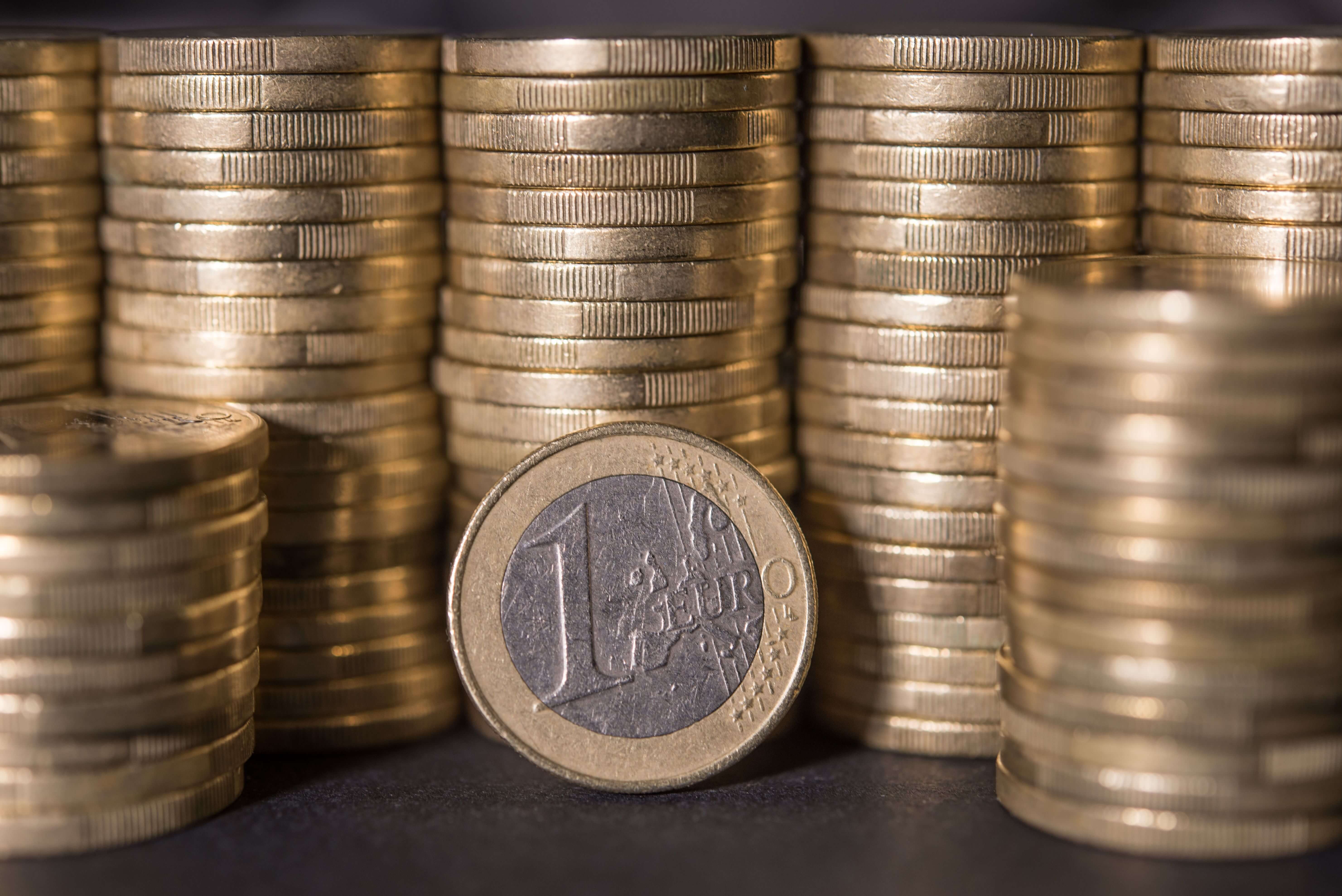
A dollar is a dollar. The cheque clears the same. The bank balance does not record where the money came from. The first principles of economics, taught in every business school, treat capital as a generic input. The supply curve does not care about the source. The cost of capital is a single number.
The first principles are wrong for the operator who is trying to build something durable.
Capital is not fungible. The dollar from a friend is not the same dollar as the dollar from a venture fund. The dollar from a strategic investor is not the same dollar as the dollar from a permanent capital vehicle. The dollar from a family office is not the same dollar as the dollar from a private equity firm with a five year hold. The dollar from a sovereign vehicle is not the same dollar as the dollar from your own balance sheet.
Each carries a different price beyond its dollar denomination. The price is paid in governance, in integrity, in optionality, in cap table dynamics, in the founder’s standing relationship with their own balance sheet. The price compounds across the holding period of the position. By the end of the holding period, the actual price of the capital is often a multiple of the apparent price at signing.
This essay maps the unwritten typology. The eight categories of capital that arrive at the founder’s door. The price each carries beyond the headline number. The structural posture each requires from the founder. The signature of the right counterparty inside each category, and the warning signs of the wrong one.
The argument closing the essay is that the most important diligence a founder ever performs is on the person writing the cheque, not on the cheque itself.
The eight categories
Capital that funds operating businesses comes from eight structurally distinct sources. The categories are not exclusive (a single counterparty can blend two) but they are useful because each carries its own holding period, its own governance posture, its own integrity surface, and its own characteristic failure mode.
Category one. Friends and family capital.
Category two. Operator capital. The founder’s own cash, the founder’s own equity, the founder’s own retained earnings.
Category three. Angel capital. High net worth individuals, often former operators, writing personal cheques.
Category four. Venture capital. Institutional funds raised from limited partners, with structured returns expectations and finite fund lifecycles.
Category five. Private equity capital. Larger institutional funds, typically taking control or significant minority positions, with five to seven year hold expectations.
Category six. Family office capital. Multi generational pools, typically with longer time horizons and bespoke governance.
Category seven. Sovereign capital. State linked funds and quasi state vehicles. Long horizons but politically inflected.
Category eight. Permanent capital. Structures whose mandate is not to exit. Holding companies, certain insurance balance sheets, family permanent capital pools, listed permanent capital vehicles.
We will move through them in sequence, naming the real price and the structural posture each requires.
Category one. Friends and family capital.
The cheapest capital to receive and the most expensive to carry.
The price is paid in relationship integrity, not in interest rate. The founder who takes a friend’s cash to fund the early venture is borrowing from an account whose currency is trust. The currency is not denominated in dollars. It is denominated in the structural integrity of a personal relationship that the founder may not be able to recover if the venture fails.
The mathematics of the position is asymmetric. If the venture succeeds, the friend gets a return modestly larger than they would have received elsewhere. If the venture fails, the friend loses their capital, and the relationship loses something that no amount of subsequent return can repurchase.
The Circle’s position is not that friends and family capital is wrong. It is that the founder must price the position correctly before accepting it. Most founders do not. They price the cheque as cheap because the headline terms are favourable. The real price is the relationship at risk, which the founder is borrowing against without explicit accounting.
The right posture, if friends and family capital is accepted, is to formalise the position as if it were institutional. Documented terms. Realistic loss expectations communicated upfront. Structural separation between the personal relationship and the commercial position. The founder who treats friends and family capital with this discipline preserves the relationship through outcomes the informal posture would not survive.
Category two. Operator capital.
The capital with the highest apparent cost and the lowest actual cost.
Operator capital is the founder’s own cash, equity, and retained earnings. Most founders treat it as their most expensive resource because it is the resource they have the most personal attachment to. The dollar from the operator’s account feels harder to deploy than the dollar from someone else’s account.
This is an emotional pricing, not a structural one. Structurally, operator capital is the lowest cost capital in the architecture. It carries no external governance. It imposes no cap table consequence. It preserves the founder’s optionality fully. It allows the architecture to be rebuilt without consultation.
The architect’s discipline is to recognise this and to deploy operator capital where it produces the highest structural return, which is usually the early stage of any new venture or the late stage of any structural rebuild. The operators inside the Circle who have produced the wealthiest architectures across decades are the operators who have, repeatedly, chosen to fund the highest stakes structural moves with their own balance sheet, even when external capital was available on apparent good terms.
The cost the founder feels is the personal exposure. The cost they save is the multi decade structural dilution that external capital would have imposed.
Category three. Angel capital.
Capital from high net worth individuals, frequently former operators, writing personal cheques.
The headline terms are usually founder friendly. The cheque is small. The governance is light. The cap table addition is modest.
The real price is in the angel’s posture during difficulty. The angel who was an operator three decades ago carries assumptions about how operating businesses behave that may not match the operator’s actual context. The angel’s involvement during stress events can be useful or destructive depending on the angel’s posture. Most founders discover which posture they have purchased only when the stress event arrives.
The Circle’s standing advice on angel capital is to weight the diligence heavily toward the angel’s behaviour in past stress events. Reference checks with the angel’s previous founders during difficulty are the most useful single diligence step. The angel’s posture in good times is identical across the category. The posture in difficulty is the variable that determines whether the capital was cheap or expensive.
Category four. Venture capital.
The most documented capital category in the public conversation and the one most often mispriced by founders.
The headline price is the equity stake. The real price is the cap table structure that comes with the equity. Preferred shares with liquidation preferences. Participation rights. Anti dilution protection. Information rights. Consent rights. Board composition rights. Drag along rights. Pre emption rights. Each is a position the counterparty holds against the founder’s future architecture.
The structural posture venture capital imposes is exit oriented. The fund has a finite life. The fund’s returns are concentrated in the small number of exits that produce outsized outcomes. The fund’s incentive at every decision point is to push toward the exit profile that returns the fund. The founder’s incentive may diverge across decades. The cap table is structured to ensure the divergence is resolved in the fund’s favour.
The Circle’s view on venture capital is not that it is wrong. It is that it is right for a specific shape of architecture, and wrong for many others. The founder building a venture scale category, with venture scale unit economics, in a venture scale timeline, is correctly served by venture capital. The founder building anything else is mispricing the position at signing and will pay the difference across the holding period.
Category five. Private equity capital.
Larger institutional capital, typically taking control or significant minority positions, with five to seven year hold horizons.
The headline price is the equity stake plus the leverage often loaded onto the operating business as part of the transaction. The real price is the operational change the private equity firm imposes during the hold period. Margin expansion targets. Pricing increases. Cost reduction programmes. Bolt on acquisitions. Management changes. Exit preparation. Each is a structural decision the firm holds the rights to drive.
Private equity capital is correctly chosen by the founder who wants to convert their position into capital and step away from operational control. It is incorrectly chosen by the founder who wants to continue building the same business with capital support. The two intents are different. The structural posture of private equity capital is aligned with the first intent, not the second.
The Circle’s members have, in some cases, taken private equity capital. In each case, the choice was made with full understanding of the structural consequence. The founder accepted that the business they were running was about to change in ways they would no longer fully control. Where this understanding is absent, the founder discovers it during the first quarterly board meeting, when the structural priorities of the private equity firm become visible.
Category six. Family office capital.
Multi generational pools, typically with longer time horizons and bespoke governance.
The headline price is the equity stake or debt position. The real price is the family office’s relationship with the founder, which is usually closer to a partnership than to a transaction. Family offices are smaller, more personal, and more idiosyncratic than institutional capital. Their decisions are made by smaller groups, often by individuals. The founder’s relationship with the principal of the family office shapes the position across decades.
The structural posture family office capital permits is patient. The horizon is longer. The exit pressure is lower. The willingness to support structural rebuilds is higher. The Circle has, across years, observed that the highest quality multi decade architectures are frequently funded by family office capital, because the time horizon of the capital matches the time horizon of the architecture.
The risk in this category is selection. The wrong family office, chosen by the wrong principal, is harder to remove than a venture capital position because the relationship is more personal. The diligence the founder must run on the family office is the diligence on the principal, the principal’s family dynamics, and the principal’s track record across stress events.
Category seven. Sovereign capital.
State linked funds and quasi state vehicles. Long horizons but politically inflected.
The headline price is similar to family office capital. The real price is the political relationship the founder enters by accepting the capital. The capital carries, often informally, expectations about the founder’s posture toward the source state. Hiring patterns. Geographic presence. Public statements. Strategic alignment.
Sovereign capital is correctly chosen by founders whose architecture is consciously aligned with the source state’s strategic interest. It is incorrectly chosen by founders who treat it as another category of family office capital. The political dimension does not appear in the term sheet. It appears across the holding period in the form of soft expectations the founder is structurally obliged to consider.
The Circle has, across years, advised members in both directions on sovereign capital, depending on the architecture they were building. The category is not bad. It is specific. The founder must understand what they are accepting.
Category eight. Permanent capital.
Capital whose mandate is not to exit.
The structural posture permanent capital permits is generational. The horizon is indefinite. The exit pressure is structurally absent. The founder is partnered with a counterparty whose interest is the long term compounding of the architecture, not the realisation of a return event.
Permanent capital is the rarest capital in the founder economy. It is structurally difficult to organise. It requires a counterparty whose own balance sheet is engineered for permanence. Family permanent capital pools. Certain insurance balance sheets. Listed permanent capital vehicles. The supply is small. The demand from operators is large.
Where it is available, and the founder’s architecture matches, permanent capital is the highest quality capital in the founder economy. The Circle is, in part, a sorting room that helps members find the permanent capital counterparties whose architectures match the member’s intended shape.
The audit at signing
The architect’s discipline is to perform the capital audit before signing, not after.
Match the holding period of the capital to the holding period of the architecture. Match the governance posture of the counterparty to the operational posture of the operator. Match the integrity surface of the counterparty to the integrity surface of the brand. Match the time horizon of the capital to the time horizon of the operator’s intent.
When the four match, the capital is high quality. The founder pays the dollar denominated cost and receives the position. The relationship compounds across the holding period.
When one of the four does not match, the founder is paying the dollar denominated cost plus a structural cost they have not seen yet. The structural cost compounds. By the end of the holding period it is, in many cases, the largest line item in the operator’s career.
A short note on blended capital structures
Real architectures rarely sit inside a single category. Most operators at structural altitude run blended capital structures across the eight categories, allocated deliberately by purpose.
Operator capital funds the highest stakes structural moves. Permanent capital underwrites the long horizon assets. Family office capital supports the patient growth. Venture capital, where used, is concentrated in the venture scale categories. Private equity capital is reserved for the assets being prepared for institutional exit. Sovereign capital, where used, is restricted to the categories where the political alignment is intentional.
The blending is the architecture. The discipline is to keep each category in its correct seat, never confusing a permanent capital problem with a venture capital solution, never accepting friends and family capital where institutional capital was the structurally correct answer.
Doctrine close
Not all money is the same money. The dollar from one counterparty is structurally different from the dollar from another. The architect prices the difference before signing.
Friends and family. Operator. Angel. Venture. Private equity. Family office. Sovereign. Permanent. Eight categories. Eight prices. One architecture.
The Circle is a room of operators who have refused capital they were offered, accepted capital others were not, and engineered cap tables that compound rather than constrain.
Structure. Access. Positioning.
The Architect Circle is application only. Two hundred and fifty seats globally. createyourownmarket.com.au.